What do Basel Area-based companies need to know to stay competitive?

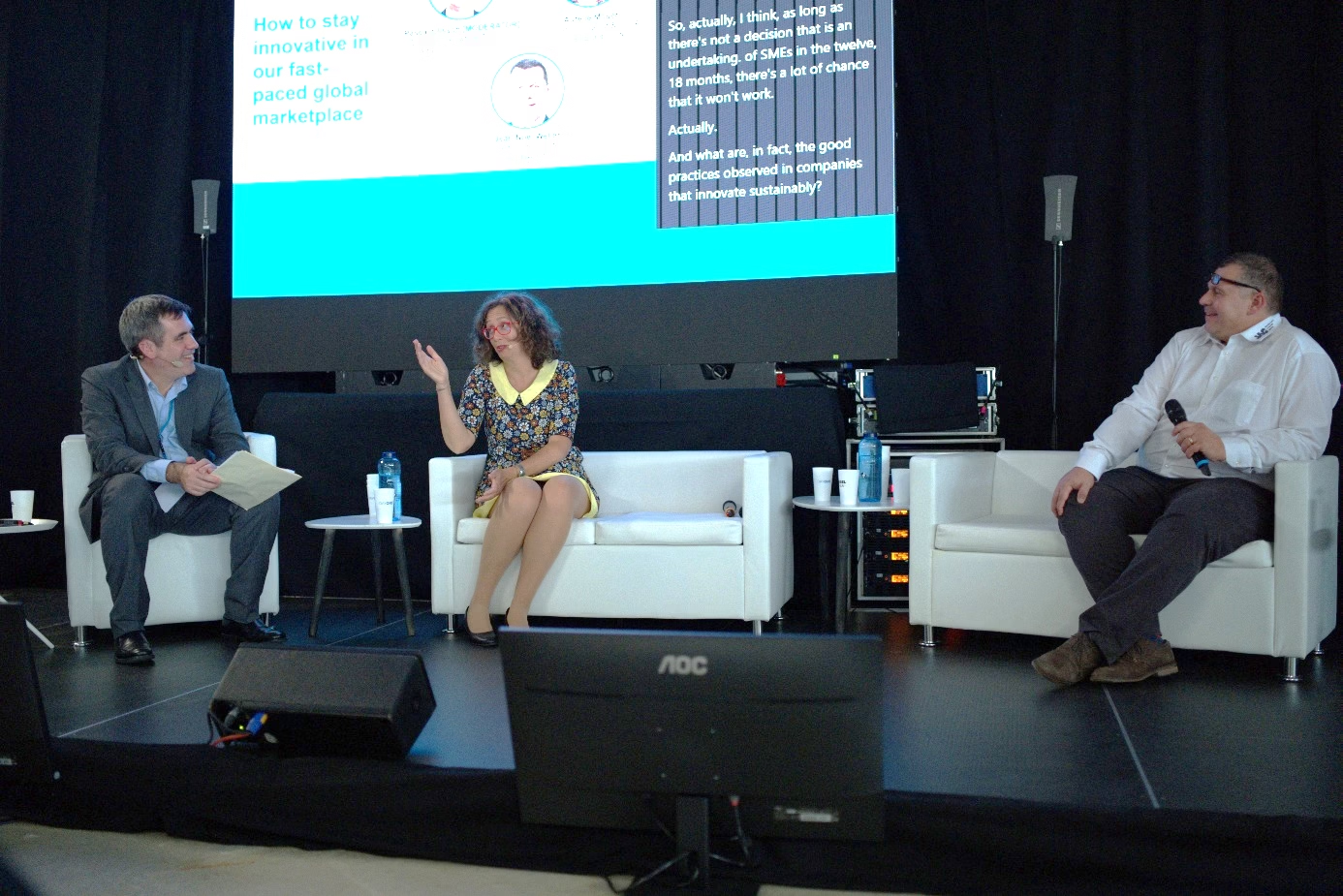
The MedTech Congress 2025 brought together leaders and specialists who highlighted the practical realities of innovation for companies based in the Basel Area. The themes raised during a panel discussion between Pascal Clisson (DayOne), Aurelie Moser (Bambooster) and Jean-Noël Weller (JAG Jakob SA) reflect the everyday challenges regional organizations face, and offer collective insights that every business can apply.
The following article summarizes the most important questions leaders are asking – and provides clear, standalone answers designed to support decision-making and long-term competitiveness.
What are the biggest barriers preventing companies from innovating effectively?
The most significant barrier to effective long-term innovation is inconsistency. Innovation requires sustained focus over time, but many companies struggle to maintain momentum because priorities shift every few months due to customer demands, resource constraints or operational pressures.
Other barriers include:
- limited customer insight
- over-reliance on internal assumptions
- fear of risk or failure
- lack of structured processes
- limited time for exploration
- resource shortages, and
- reluctance to step outside established markets or expertise.
Innovation becomes possible when companies commit to consistent effort across 12 to 18 months, supported by clear goals and aligned leadership.
What practices help companies innovate more successfully?
Successful innovators share three attributes:
- Strong customer proximity: They invest time in visiting clients, observing workflows, asking clarifying questions and understanding the deeper meaning behind customer requests. This leads to more targeted solutions and reduces unnecessary complexity.
- A learner’s mindset: They approach every opportunity with curiosity, humility and openness. They challenge assumptions, seek feedback early and test ideas before committing to anything. This helps them prioritize effectively and avoid costly detours.
- Comfort with leaving their comfort zone: They engage with partners they’ve never worked with before, explore new markets, and adopt unfamiliar technologies. This openness often uncovers opportunities that would otherwise remain hidden.
How can companies enter new sectors where potential clients may not understand their technology?
Entering a new industry is less about technology and more about communication, clarity and partnership. Organizations succeed by:
- breaking down technical concepts into simple explanations
- clarifying requirements early
- demonstrating possibilities through examples, prototypes or pilot projects
- offering step-by-step guidance rather than overwhelming clients with complex options
- leveraging long-standing expertise to build credibility, and
- supporting clients through the learning curve of adopting new technologies.
In the Basel Area – where industrial quality and precision are highly valued – this approach helps companies expand into areas like medtech, aerospace, automation and high-precision manufacturing.
What common mistakes do organizations make when preparing innovation funding applications?
The most common mistake is focusing too heavily on the technology itself while neglecting the market and business context. Strong applications must show:
- who the end user is
- who will make the buying decision
- who will pay for the solution
- how representative early customer feedback is
- what problem is being solved
- why the proposed solution is unique or superior, and
- what risks have been identified and how they will be managed.
A technology-driven proposal without a clear customer and viability case often fails because it suggests insufficient market understanding.
What does a successful innovation project look like?
Successful innovation is defined not by complexity but by clarity and collaboration. Effective projects typically involve:
- a clear understanding of the customer’s goal
- open dialogue between the company and the client
- early validation of concepts
- iterative refinement based on feedback
- disciplined control of costs and scope
- leveraging the organization’s core expertise in new ways, and
- a realistic, achievable solution rather than an over-engineered one.
These projects evolve through learning. They rarely end exactly where they began – but they end with a solution that creates value for both the client and the customer.
What is the single most impactful step a company can take to become more innovative?
Two actions make the biggest difference:
- Improve the quality of information entering the organization: Teams interacting with customers must learn to gather deeper insights – not just surface-level requests. Effective questioning, follow-up and synthesis skills allow companies to identify unmet needs and prioritize the right problems.
- Strengthen internal and external communication: Innovation depends on connectivity. Organizations that communicate openly and frequently across teams – and with customers, partners and suppliers – learn faster, adapt earlier and make better decisions.
Both capabilities significantly increase the success rate of any innovation initiative.
Final thoughts
Innovation is not a radical act reserved for high-tech companies. It is a structured, practical discipline that helps companies stay competitive, resilient and profitable. Basel Area-based organizations already have the craftsmanship and quality culture needed to excel – and by building stronger innovation practices, they can secure their place in a fast-moving global economy.
To explore how our Level Up services can support your SME’s innovation journey, visit our service offering overview page.
About the experts
Feeling pressure to change but unsure how to start without wasting time and money? Aurelie Moser is the founder of Bambooster, on a mission to remove waste of time, energy and resources in organizations. Bambooster helps SMEs build simple innovation systems that reduce risk, free up teams’ time, and create results customers will pay for. Aurelie helps create future-proof and high-performing teams (humans + GenAI), and develop innovation strategies and products faster.
Jean Noël Weller is Sales Director at JAG Jakob SA (JU), a company specializing in industrial automation and the integration of advanced technological solutions. He is responsible for the company’s commercial strategy and supports industrial companies in their modernization, robotics and process optimization projects, particularly in the pharmaceutical and high-precision sectors. With his solid experience in business development and management, he is key in positioning JAG Jakob SA as a key partner in intelligent automation. In 2025, the company won the RAYA – ISPE Robotics Application of the Year Award, a double distinction that recognizes the excellence and innovation of solutions they develop.